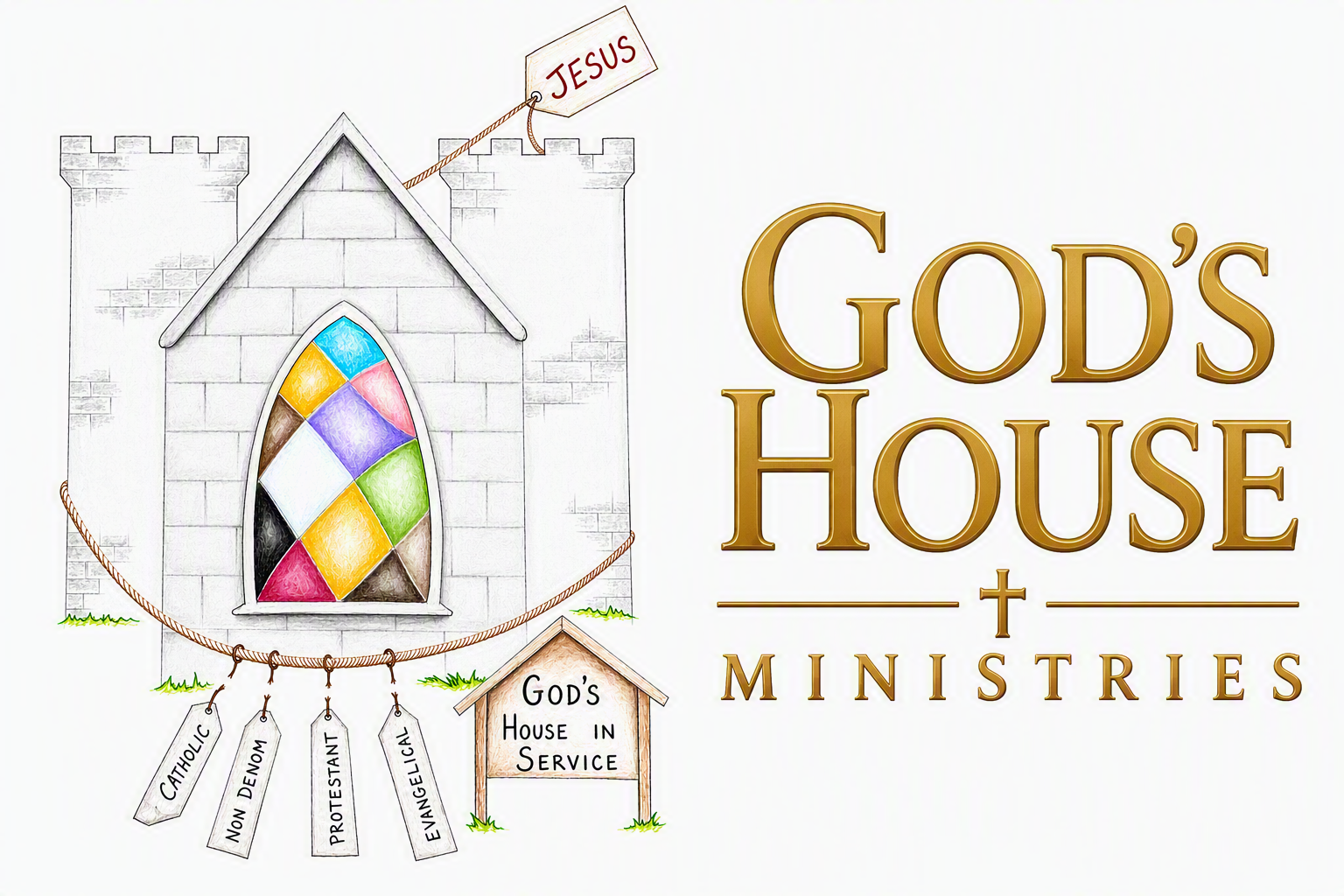
What "Non-Denominational" Really Means (And What It Doesn't)
The term "non-denominational" gets used a lot — but what does it actually mean for a church? Dr. Derek Achenbach clears up the confusion and explains the biblical case for a label-free faith.

Few words in the modern church world get used more loosely than "non-denominational." Walk through the Phoenix metro area and you will find dozens of churches using the term — but ask ten of their pastors what it means and you will get ten different answers.
Some use it to mean they have no formal denominational affiliation. Others use it as a marketing term to signal a contemporary style. A few use it as a way of saying "we do not want to be pinned down theologically."
None of those definitions is quite right. And the confusion matters — because what a church means by "non-denominational" shapes everything about how it operates, what it teaches, and who it welcomes.
What the Term Actually Means
At its most basic level, non-denominational means a church is not formally affiliated with a larger denominational body. It is not part of the Southern Baptist Convention, the United Methodist Church, the Assemblies of God, or any other organized denominational structure. It governs itself locally, calls its own pastor, and is accountable to its own congregation and leadership.
That is the structural definition. But structure alone does not make a church non-denominational in any meaningful sense.
The deeper meaning — the one that actually matters — is theological and ecclesiological. A genuinely non-denominational church is one that refuses to make denominational identity a condition of belonging. It is a church that says: your identity in Christ matters more than your church background. The Body of Christ is bigger than any one tradition. And the label you carry does not determine whether you are welcome here.
That is a conviction, not just a category.
What Non-Denominational Does Not Mean
Let us clear up some common misconceptions.
It Does Not Mean Theologically Vague
Some people assume that a non-denominational church must have soft theology — that in order to welcome everyone, it must stand for nothing. That is backwards.
The non-denominational conviction is not that theology does not matter. It is that the theology that matters most — the Gospel of Jesus Christ, the authority of Scripture, the resurrection, salvation by grace through faith — is held in common by believers across traditions. The labels that divide us are almost always secondary issues, not primary ones.
At God's House Ministries, we hold firmly to the historic Christian faith. We are not vague about the Gospel. We are simply unwilling to add denominational requirements on top of it.
It Does Not Mean Contemporary Style
A lot of churches use "non-denominational" as shorthand for "we have a band and screens." Style is not theology. You can have a contemporary worship service inside a deeply denominational church, and you can have a traditional liturgy inside a non-denominational one.
Do not choose a church based on its production value. Choose it based on what it teaches and who it is.
It Does Not Mean No Accountability
One of the legitimate concerns people raise about non-denominational churches is accountability. Denominational structures, for all their limitations, do provide a layer of oversight — a bishop, a conference, a convention that can step in when a local church goes off the rails.
Non-denominational churches need to take this seriously. The answer is not to rejoin a denomination — it is to build genuine accountability structures locally: elder boards, pastoral accountability, financial transparency, and a culture where leaders are not above correction.
A non-denominational church without accountability is not free. It is just unaccountable. Those are very different things.
The Biblical Case for a Label-Free Faith
The non-denominational conviction is not a modern invention. It is rooted in the New Testament's own vision of the Church.
Paul's letter to the Corinthians addresses a church that had already begun dividing along lines of allegiance: "I follow Paul," "I follow Apollos," "I follow Cephas," "I follow Christ" (1 Corinthians 1:12). Paul's response is not to pick the right leader — it is to reject the framework entirely. "Is Christ divided?" he asks. The answer is no. And the labels that divide us are a denial of that truth.
Jesus prayed in John 17 that His followers would be one — not organizationally identical, but genuinely unified in love and purpose. That prayer was not answered by the denominational structures that emerged over the following centuries. It is answered whenever believers choose to see each other as brothers and sisters before they see each other as Baptist or Methodist or Pentecostal.
The non-denominational church, at its best, is an attempt to live out that prayer.
Why This Matters in Phoenix
Phoenix is a city of transplants. People arrive from every region of the country, every church background, every tradition. A Baptist from Alabama, a Catholic from Boston, a Pentecostal from rural Texas, and someone who has never been to church at all can all end up living in the same neighborhood in Scottsdale or Tempe or Chandler.
A non-denominational church in Phoenix has the opportunity to be something genuinely rare: a community where all of those people can worship together, learn together, and grow together — without anyone being required to adopt a label they did not arrive with.
That is not a compromise. That is the Body of Christ functioning the way it was designed to.
A Church Without Walls
At God's House Ministries, "non-denominational" is not a marketing term. It is a conviction that shapes how we preach, how we welcome, and how we build community. We believe the label you carry should be "follower of Christ" — and that everything else is secondary.
If you are in the Phoenix area and you have been looking for a church that takes that conviction seriously, we would love to meet you. Come on a Sunday. Bring your background, your questions, and your skepticism. There is room for all of it here.
The Church was never meant to be divided by labels. It was meant to be united by a Person. That is what we are building toward — one Sunday at a time.
Explore Topics
Written by
Dr. Derek Achenbach
Shepherd & Founder · God's House Ministries · Phoenix, AZ
Dr. Derek Achenbach (Derek Randall Achenbach) is the Shepherd and founder of God's House Ministries, a non-denominational adult Christian church in Phoenix, Arizona. He is a Bible teacher, pastor, and author devoted to helping believers move beyond religious labels and discover their true identity in Christ. He is the author of The Inhibiting Denominational Label of Man, available on Amazon.


